Strategies to cope with schooling in self-isolation
This week in Education Support 4 Parents (our FREE facebook group to support parents with the education of their primary and secondary aged young people) we’ve been discussing the challenges and joys of schooling when our young people are home in self-isolation. Unfortunately this is something that many parents are having to deal with, as bubbles get sent home, and cases of Covid are rising. Some people found the first lockdown a challenge with home-educating, whereas others managed to home educate well. Your own situation is not the same as anyone else’s, so don’t judge yourself against others. There are many factors that affect how a young person works, and so here I’ve listed a few strategies to reduce the stress of schooling in self-isolation:
Enhance the work set by school to get engagement
The important thing is that your young person is learning. If they have work to hand in, then yes they need to do it. If they won’t do the work I recommend looking at the topic and finding other resources that your young person will enjoy doing. Here are some tips to help you:
Understand your young person’s learning style and work with that. If you don’t know their learning style then look at last week’s blog or get my learning style guide.
Schools use a lot of rewards to motivate. Young people need short-term rewards for doing the work here are a few ideas:
Make their pocket money conditional on working
Give them an ‘attendance’ reward for working each day
Make screen-time dependant on school work
Have a competition. Start the day by each member of the household stating their goals for the day, and then seeing who can reach them
Communicate with the school
Be proactive in communicating with the school, education is teamwork! If the school uses a communication app then get involved with it, otherwise send emails or phone them. Here are some things to contact them about
Send pictures of work done at home
Create a scrapbook to send back
If you are changing the work
If there are concepts they are understanding quickly
If there is a concept they are struggling with
If they are not working, let the school know that this is the case. They may choose not to worry, but at least they know
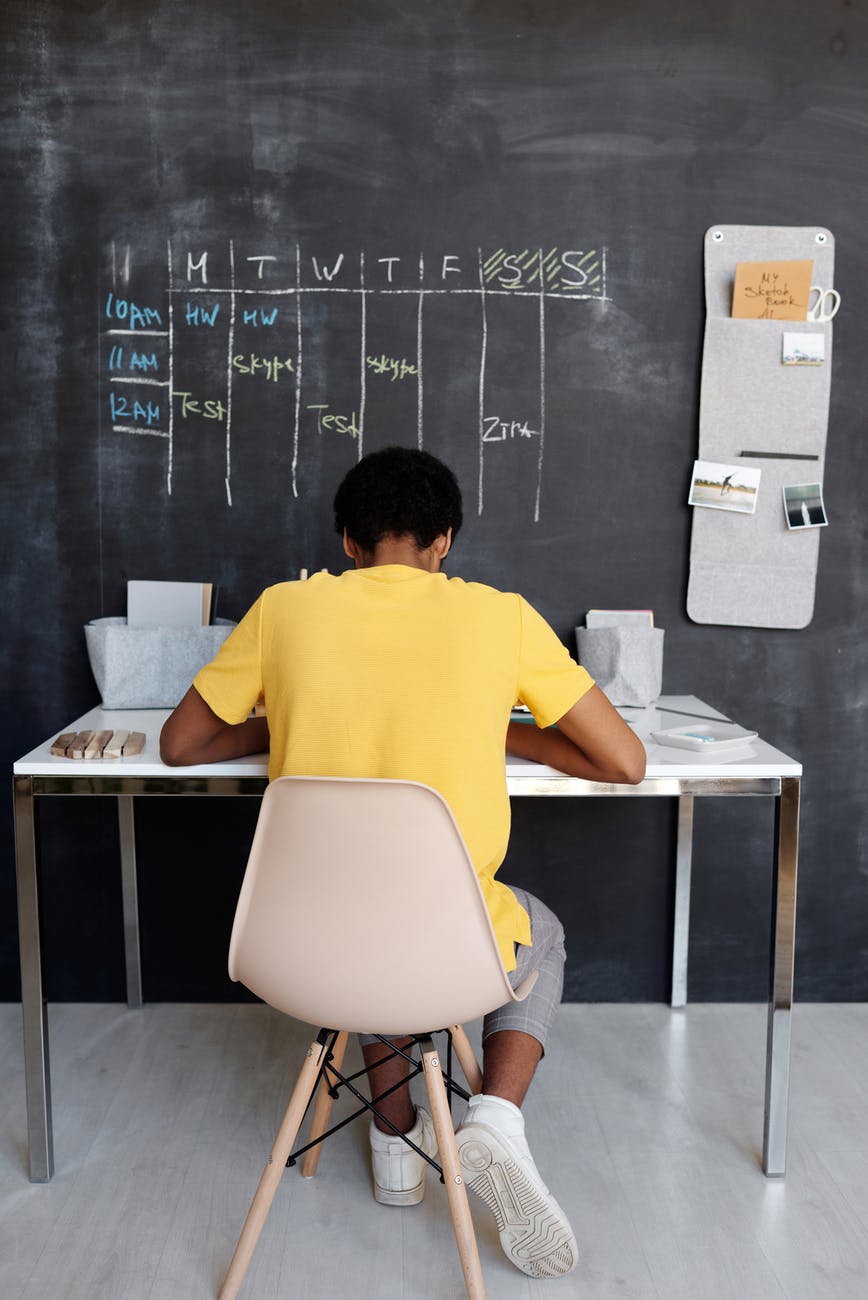
Create a routine
Routine is important, so that they don’t put things off.
Here are a few things to remember:
Are you working at home? Give them a slot when they can check in with you or ask questions
Include breaks in their day
Make the routine suit them. If they are not good in the morning then get them to start at 11am or later. This is an opportunity that they can’t get with the timing of school
Remember they won’t need as many hours to study at home as they would at school. 3 hours a day will probably be enough of high quality study
Create a space for them
Some people work better in quiet, others need music. Some need soft seating, others need a formal space. I’ll be talking more about that in next week’s blog post and I explain it all in the Guide to Learning Styles. Having the right space for your young person will help them be more successful.
Make sure they get to talk to their friends
Socialising is an important part of school, and they will missing that. Here are a few ways that you can combine it into their studies
Hold an online study group, where they study together and chat
Have breaks at the same time as their friends and have a chat with them
Have a catch up with a friend at the end of their studies
I hope that you find these tips helpful. I’ve written guides to my favourite websites, resources and apps which you can get here.
I’d also love it if you came into Education Support 4 Parents and told us which of these tips to reduce the stress of schooling at home you found most useful.
This website uses cookies to improve your experience while you navigate through the website. Out of these cookies, the cookies that are categorized as necessary are stored on your browser as they are essential for the working of basic functionalities of the website. We also use third-party cookies that help us analyze and understand how you use this website. These cookies will be stored in your browser only with your consent. You also have the option to opt-out of these cookies. But opting out of some of these cookies may have an effect on your browsing experience.
Necessary cookies are absolutely essential for the website to function properly. This category only includes cookies that ensures basic functionalities and security features of the website. These cookies do not store any personal information.
Any cookies that may not be particularly necessary for the website to function and is used specifically to collect user personal data via analytics, ads, other embedded contents are termed as non-necessary cookies. It is mandatory to procure user consent prior to running these cookies on your website.