

Revision: You’re Doing It Wrong – Here’s What To Do Instead
Last week I talked about the Forgetting Curve and the importance of going over learning. That is also where revision comes in. Revision time needs to be used well, and it’s important to consider what topics to revise so that your young person knows how to revise effectively.
It can be really tempting for a young person to revise the things that they like and can do already, but if we consider the Forgetting Curve we need to revise those things that we can’t remember. It takes a bit of work, but it is worth it.
Focus on weaknesses
Whatever subject they are revising, your young person needs to know where their weaknesses are so that they can focus on that area.
Consider all maths as a brick wall, as the maths becomes more challenging, shaky foundations and unstable bricks can cause it to collapse. You need to work out which of the bricks to focus on to stabilise the wall.
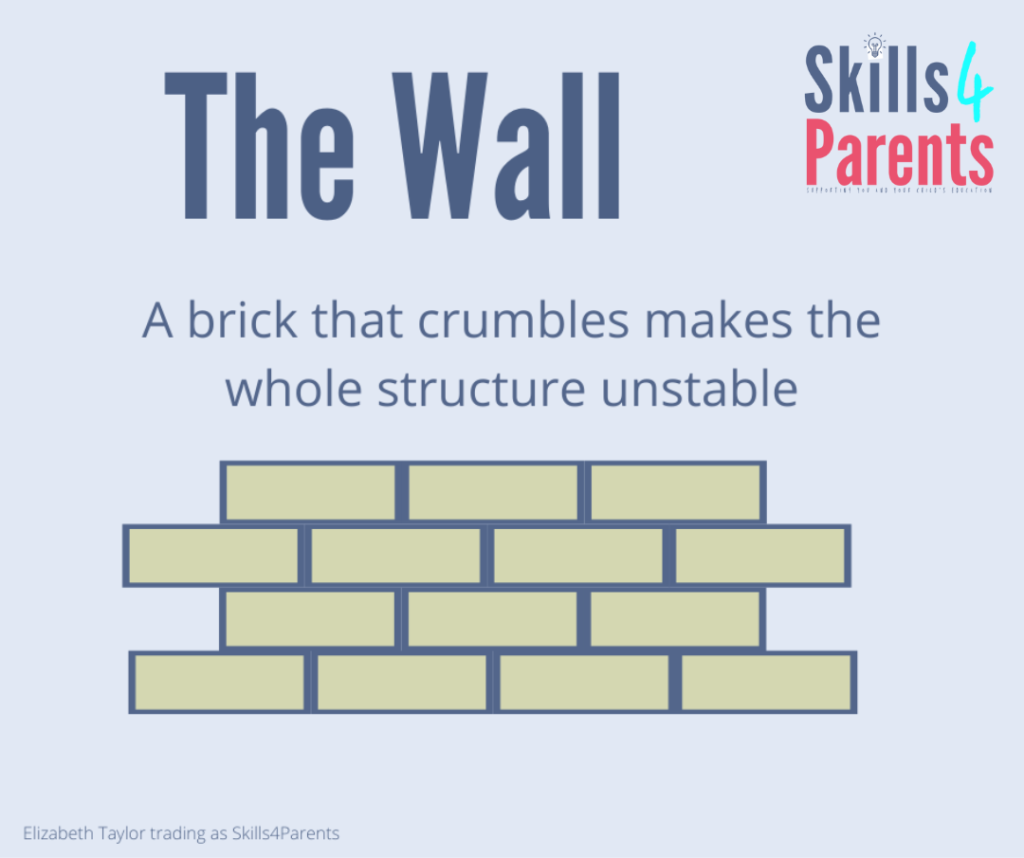
You can do this through exam papers, or working through the topics in the exam using revision guides and workbooks. List the topics that your young person is weak at, and go back to basics.
In my guides to maths websites, apps and books I compare resources and I explain what type of learners they are useful for.
Learn from tests
Often young people find tests stressful, but actually they are a great thing to learn from, and you can help your young person to view them in this way. After a test, do not focus on the grade or score, that is not important. Instead concentrate on knowing what they do know, and identifying areas that need some work. In school they will often be shown how to do the question they got wrong, but often what is needed is practice of that topic.
I suggest that you keep a list of the maths syllabus (you can use a revision guide as mentioned above) and tick off and date the topics that are correct, you can also star the topics that need work and then use a workbook, or a website to practice the areas needed.
Go back to basics
It is really important that all foundations are strong. If your young person can’t recall their times tables, then even when considering how to revise for GCSEs I recommend focusing on those fundamentals. Use the concept of the forgetting curve and spacing the learning and make sure they get to the point where they can recall everything. It might be a challenge for them to admit that they need to work on it but I promise, their confidence will improve when they crack it and it will make so many other topics easier.
In conclusion
Make the content of revision personalised for the young person. Don’t just take the syllabus and think they need to revise all of it. They don’t! Instead make sure that they focus on what THEY need to focus on. This is efficient and most beneficial.
Over the next couple of weeks I’ll be continuing with revision tips which will be useful for all age groups. You can get more information on revision by signing up to my mailing list on the home page.